
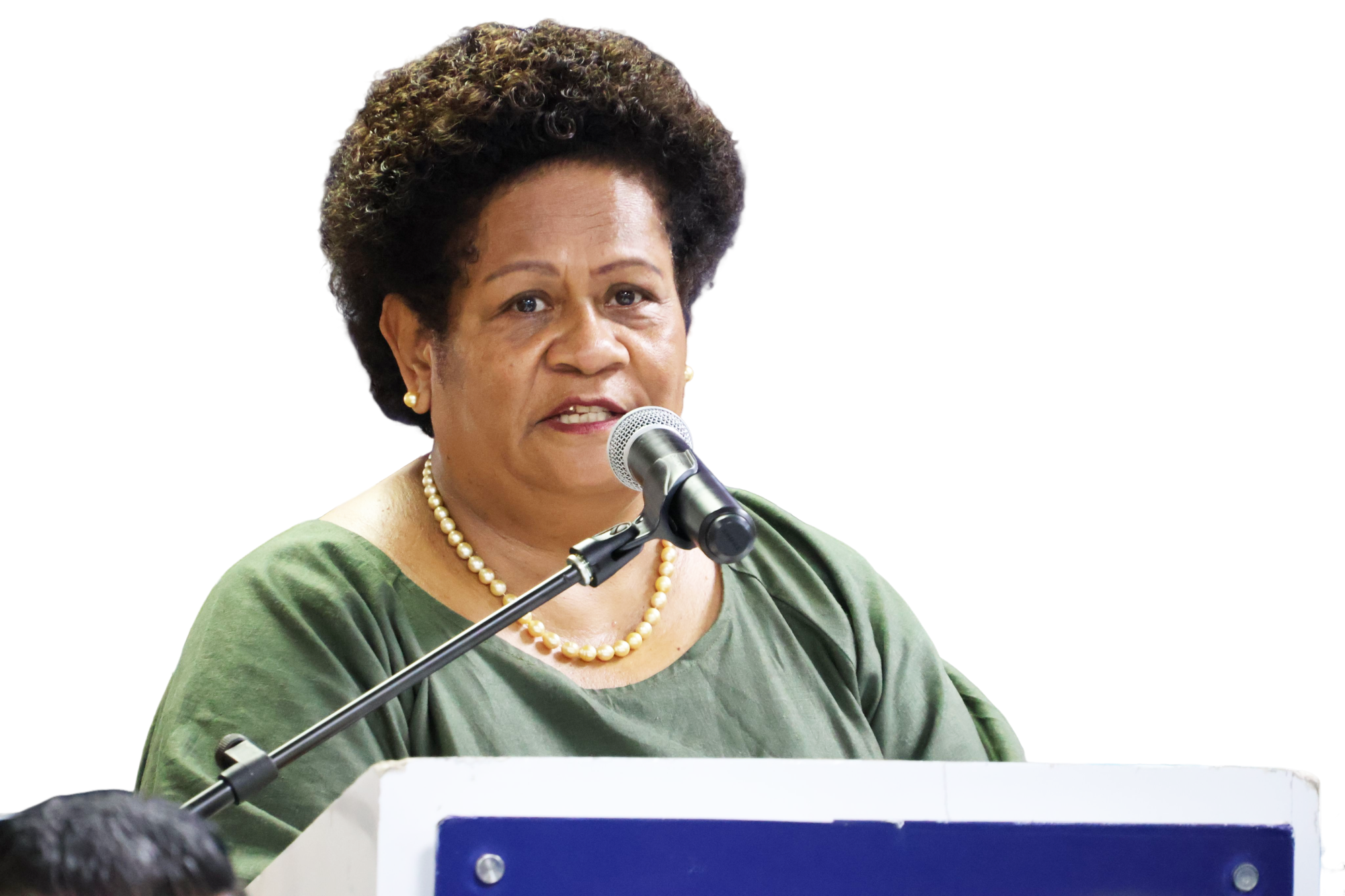
Professor Unaisi Nabobo-Baba
Professor Unaisi Nabobo-Baba has more than 40 years of experience in the field of education, particularly in higher education and development. Her work has been in teaching, research, publication and a wide range of education and development-related initiatives across the Pacific Islands. She is a respected educator, researcher and prolific author.
Her extensive career has included academic leadership, international accreditation processes with the Western Association of Schools and Colleges (US-WASC) in the United States and the Academic Quality Agency for New Zealand Universities (AQA-NZ), postgraduate thesis supervision, examination and mentoring, institutional strengthening, international consultancy work in higher education, publication, and policy advisory roles at national, regional and global levels.
Professor Nabobo-Baba currently serves as Vice-Chancellor and Professor of Education at the Fiji National University. Prior to this appointment, she spent seven years at the University of Guam, departing in October 2017 as a tenured Professor of Education.
Her career began in 1986 following the completion of a Bachelor of Arts and Graduate Certificate in Education. She taught at Queen Victoria School, Matavatucou before joining the Fiji College of Advanced Education in 1992, which is now part of the Fiji National University. In 1996, she joined the University of the South Pacific as a Lecturer in Education after completing a Postgraduate Diploma in Education and a gold medal-winning Master’s thesis in Education and the Social Sciences, specialising in higher education and development. Between 2001 and 2005, she undertook and completed her doctoral studies at the University of Auckland.
Professor Nabobo-Baba is passionate about quality and relevance in education. Her research, publication and consultancy interests include teacher education, education reform, international aid in Pacific education, Indigenous knowledge systems, research and development, higher education, education for sustainable development, women in leadership in the Pacific Islands, and rural and remote education.
Since 2011, she has also been actively engaged in policy development across the Northern Pacific while contributing to scholarship and public speaking on Pacific epistemologies, ecological justice, wellbeing, and traditional approaches to sustainable development that complement contemporary global perspectives.