
Research must go beyond academic knowledge and translate into practical solutions that improve lives, strengthen industries and drive Fiji’s development.
This was the strong message from the Prime Minister, Honourable Sitiveni Ligamamada Rabuka, who has challenged the Fiji National University (FNU) to continue building its research capabilities, strengthen industry partnerships and ensure its work contributes directly to the country’s development priorities.
He delivered the message at the launch of the Ministry of Strategic Planning, National Development and Statistics’ key documents, including FNU’s Strategic Plan 2027–2031, at the Holiday Inn in Suva, yesterday.

The Prime Minister, honourable Sitiveni Ligamamada Rabuka.
The Prime Minister added that investment in education must deliver more than qualifications, stressing the importance of turning knowledge, research and innovation into tangible benefits for the people of Fiji.
“Good statistics lead to better policies. Better policies lead to better investments, and better investments must ultimately lead to better outcomes for our people. Our national development ambitions will only be realised if we continuously invest in education, research, knowledge and innovation. The Fiji National University has a particularly important role to play in this regard,” he said.
He highlighted FNU’s position as a dual-sector institution offering both higher education and technical and vocational education and training (TVET), saying this placed the University in a strong position to equip people with the professional, technical and practical skills needed by industry and the wider economy.
The Prime Minister also challenged universities and research institutions, to focus their expertise on some of Fiji’s most pressing needs, including climate resilience, agriculture, fisheries, healthcare, technology, productivity and economic diversification.
“Research must not remain confined to academic institutions or publications. It must translate into practical solutions, innovation, improved productivity and better livelihoods,” Hon Rabuka reiterated.
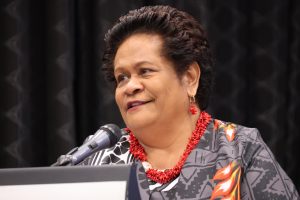
FNU Vice-Chancellor Professor Unaisi Nabobo-Baba.
For FNU, the launch of its Strategic Plan 2027–2031, marks an important step in shaping the University’s future and strengthening its contribution to national and regional development.
The Vice-Chancellor Professor Unaisi Nabobo-Baba said the plan would guide the University’s efforts to strengthen governance, advance institutional autonomy and deliver accessible, relevant and quality higher education and TVET for Fiji and the wider Pacific.
She added that FNU’s direction must remain closely connected to the needs of the people it serves, ensuring that education, skills development, research and innovation contribute to meaningful social and economic progress.
“The future of our institutions is closely connected to the future of our nation. The work we do in education, skills development, research and innovation must respond to the needs of our people and contribute meaningfully to Fiji’s social and economic progress,” Professor Nabobo-Baba said.

The United Nations Population Fund (UNFPA) Director, Ms Bidisha Pillai
“Let us join hands. Government, traditional leaders, civil society, academic partners, the private sector and the United Nations, with a shared commitment, renewed political will and collective determination to turn this policy into meaningful action.”
“Together, we can build a future where every pregnancy is wanted, every childbirth is safe, and every young person has the opportunity to reach their full potential,” Ms Pillai said.