
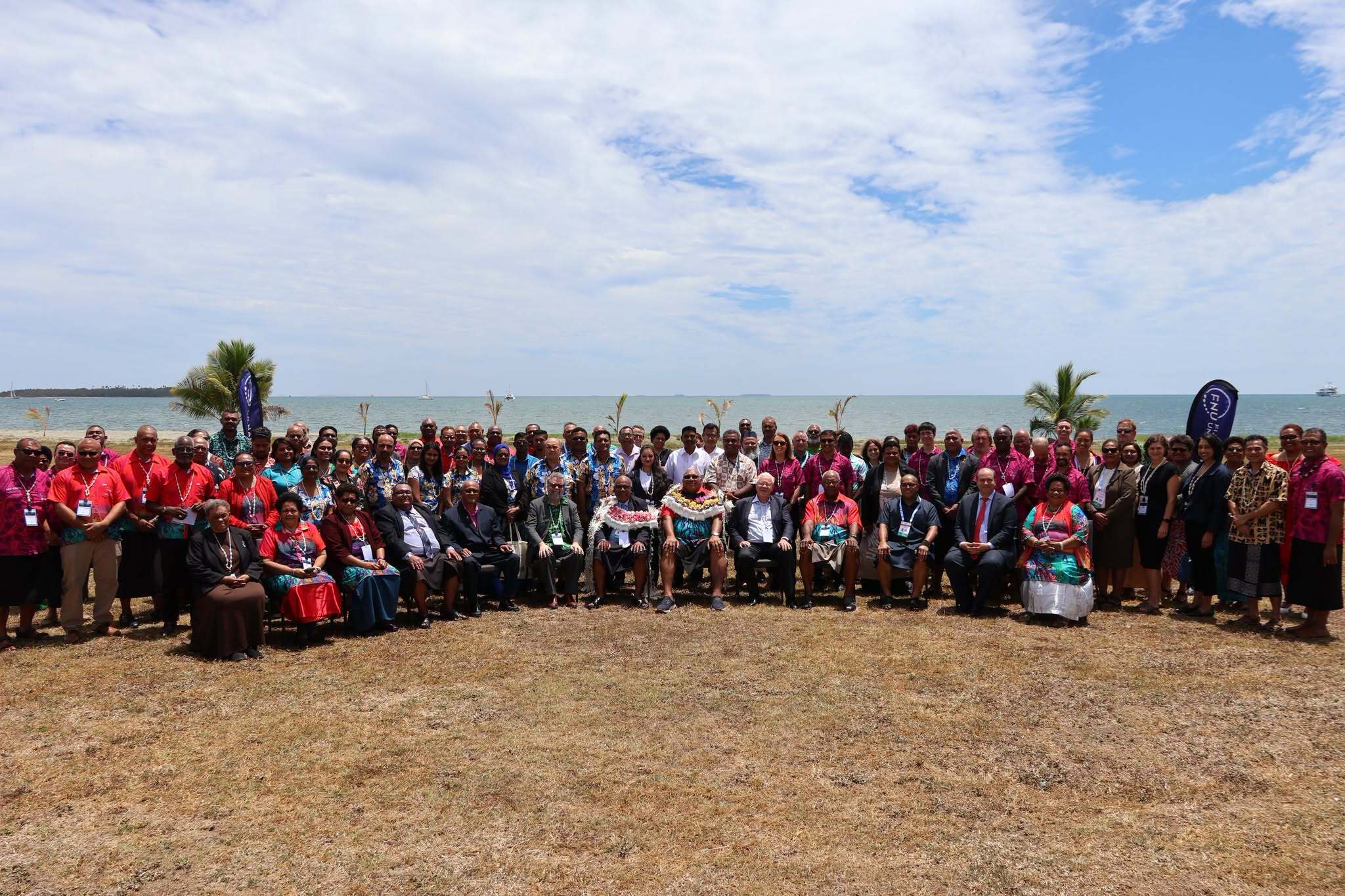
Participants at the FNU-PACT Pre-COP event
For the Pacific, natural capital is not simply a financial asset or a figure on a balance sheet. It is land, people, culture, ocean, ancestors, and the generations yet to come.
That message was at the heart of a Fiji National University (FNU) Pacific Action for Climate Transitions (PACT) Pre-COP31 side event held at the Hilton Beach Resort & Spa in Nadi on Monday, 5 October.
Titled “Investing in Natural Capital: The Pacific Opportunity”, the dialogue brought together Fiji’s Prime Minister, Honourable Sitiveni Rabuka, Solomon Islands Prime Minister, Honourable Matthew Wale, Na Turaga na Tui Macuata and former President of Fiji, Ratu Wiliame Maivalili Katonivere, along with members of the diplomatic corps, traditional leaders, development partners, financiers, researchers and students.
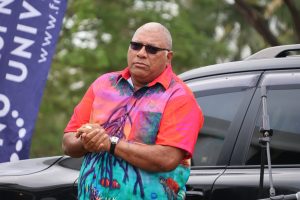
Tui Macuata, Ratu Wiliame Katonivere
While opening the event, Ratu Wiliame challenged the delegates to look beyond the language of markets, investment and finance and understand what natural capital means to Pacific communities.
“In Fiji, natural capital is not an asset on a balance sheet. It is the ‘vanua’. When we say ‘vanua’, we do not mean only the land. We mean the land, the people, and the customs that bind them, the reefs and the rivers, the ancestors buried in the soil, and the generations not yet born,” Ratu Wiliame explained.
He added that this relationship carries a responsibility for those entrusted with the care of the land and sea.
“A chief does not own the ‘vanua’. A chief holds it in trust. My authority over the land and the sea is not a right to use them as I please. It is a duty to ensure that they are passed on whole,” Ratu Wiliame further stated.
That responsibility, he added, can sometimes mean, saying no to activities that may offer immediate returns but leave future generations with less.
“This is why a chief must sometimes say ‘no.’ No to the harvest that is too large. No to the quick profit that empties the reef. No to the development that leaves our children poorer than ourselves,” he emphasised.
But he made clear that protecting the ‘vanua’ does not mean rejecting development.
“Development that brings ‘sautu’ (peace, wellbeing and prosperity) is development, we welcome. Development that destroys it is no development at all,” Ratu Wiliame said.
He welcomed investment in natural capital and better management of Fiji’s natural resources, particularly where this creates opportunities for young people to build their futures at home.
At the same time, he reminded international partners that Pacific communities must have a leading voice in decisions about their resources.
“We are grateful for our partners, and we need them. But let it be clearly understood this is our house, and these are our resources, and the Pacific must lead in deciding their future,” Ratu Wiliame highlighted.
Na Turaga na Tui Macuata’s message was clear and that was investment must strengthen the ‘vanua’, not leave it depleted.
“As you speak today of markets and mechanisms, of credits and capital, do not forget whose ‘vanua’ you are speaking of. Let the partnerships you build respect the custodians of these resources. Let the investment you design leave our ‘vanua’ stronger, not stripped,” he reiterated.
Ratu Wiliame also stated that the connection between people and the natural world is shared across the Pacific, reflected in words such as whenua, fenua, honua, ‘vanua’ and fonua.
“That is not an accident. It is the sound of one ocean that arrived, long before any climate conference, at a single truth: that the human being and the natural world are not separate, and that those who lead must protect what sustains us all,” he said.
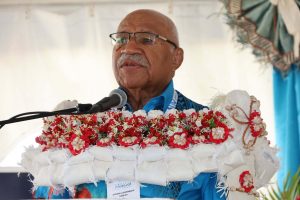
Fijian Prime Minister Honourable Sitiveni Rabuka
In closing the dialogue, Prime Minister Sitiveni Rabuka said the gap between global climate commitments and the realities faced by Pacific communities remains too wide.
“Too little climate finance reaches small island developing states. Even less reaches the communities that face the greatest risks,” he said.
Hon. Sitiveni Rabuka added that for climate finance that is accessible, predictable, adequate and grant-based, supported by practical projects in nature-based solutions, sustainable fisheries, renewable energy and the blue economy.
“What vulnerable countries need is grant-based assistance. It is not a failure of Pacific ambitions, it is a failure of access,” he expressed.
The Prime Minister also presented the Pacific Statement on Natural Capital, which calls for Pacific natural systems to be valued, protected and sustainably managed, while ensuring greater recognition of customary ownership and traditional knowledge.
“This statement will not simply sit on a shelf. It will inform Fiji’s engagement at COP31,” he reiterated.
The event also explored the opportunities for investment, while recognising the need to balance global approaches with Pacific realities.
Delegates heard that the 2025 State of Environment Report for the Pacific Islands rates the overall state and trend of the region’s environment as “fair to poor”, while every fraction of a degree of warming above 1.5°C matters for island nations.
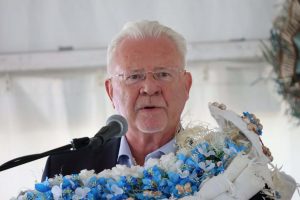
Mr David Brand
David Brand, founder of New Forest and a supporter of a Monash University research programme now extending to FNU, said the economic understanding of land is changing.
“Land management is not just about producing food and wood fibre. It is going to be central to reaching net zero and becoming nature positive,” he said.
Mr Brand also acknowledged that international investment approaches must be tested against local realities, including Fiji’s traditional land ownership.
The event ended with a question from Tui Macuata that brought the discussion back to its starting point, which was the responsibility to future generations.
“Let every decision made in this room pass the oldest test our ancestors knew and that was, will our grandchildren thank us, or will they ask why we did not protect what was theirs,” he said.
Before the side event, participants visited upland agroforestry sites, coastal mangroves and a village experiencing erosion and flooding, seeing firsthand the realities of climate change and bringing those experiences into the discussions.