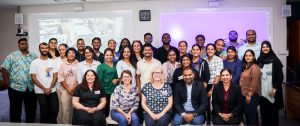
The Fiji National University’s College of Medicine, Nursing and Health Sciences, through the School of Health Sciences and the WFUMB Fiji Centre of Education, hosted a Basic Point of Care Ultrasound Course from 29–30 June 2026, strengthening practical ultrasound skills for health professionals working across Fiji’s health system.
The two-day course brought together 25 participants from Fiji, including participants from hospitals in the Central, Western and Northern divisions. The programme covered ultrasound physics, vascular access, eFAST, abdominal aortic aneurysm assessment, lung ultrasound, demonstrations and hands-on scan stations.
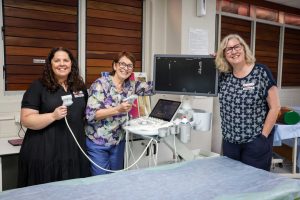
The workshop was facilitated by Susan Campbell Westerway, Carolynne Cormack, Lynne Johnson and Claire O’Reilly, with a strong emphasis on practical scanning, clinical relevance and safe use of ultrasound in frontline settings.
Assistant Professor Raymond R. Keshwan, Head of the School of Health Sciences, Co-Director of the WFUMB Fiji Centre of Education and current President of the Pacific Islands Society for Ultrasound in Medicine and Biology, said the course responded to a very real challenge in Fiji: patients often present in settings where immediate access to diagnostic imaging is limited.
“In many parts of Fiji, the question is not whether ultrasound is useful. The question is whether the patient can access it at the time it is needed,” Assistant Professor Keshwan said.
“Point of care ultrasound is important because it brings a focused diagnostic tool closer to the patient. In emergency care, acute presentations, vascular access, trauma, abdominal and lung assessment, even a focused scan can help clinicians make earlier decisions, recognise risk and escalate care appropriately.”
Assistant Professor Keshwan said ultrasound education in Fiji and the Pacific must be practical, multidisciplinary and patient-centred.
“We cannot treat ultrasound only as a protected professional territory in developing island countries where access to healthcare and diagnostics is already limited. Ultrasound must also be recognised as a multidisciplinary clinical tool. That does not mean unregulated use. It means proper training, defined scope of practice, supervision, competency assessment and quality assurance.”
He said the approach strengthens, rather than weakens, the role of imaging professionals.
“Specialist sonographers and medical imaging professionals remain central to high-quality diagnostic services. But in our setting, we also need trained clinicians who can use focused ultrasound safely to answer immediate clinical questions. Patients should not be disadvantaged simply because they are far from specialist services or because the system has limited imaging capacity.”
Assistant Professor Keshwan said FNU’s role was to help bridge this gap through training that is directly linked to service needs.
“As the national university, FNU must contribute to workforce development in ways that are real and useful. This workshop is about more than teaching a skill. It is about improving patient pathways, supporting timely decisions and building a health workforce that can respond to the realities of Fiji’s hospitals and communities.”
The Basic Point of Care Ultrasound Course forms part of ongoing collaboration between FNU, WFUMB Fiji and PISUMB to strengthen ultrasound education and improve access to safe, appropriate and clinically relevant imaging practice in Fiji.