
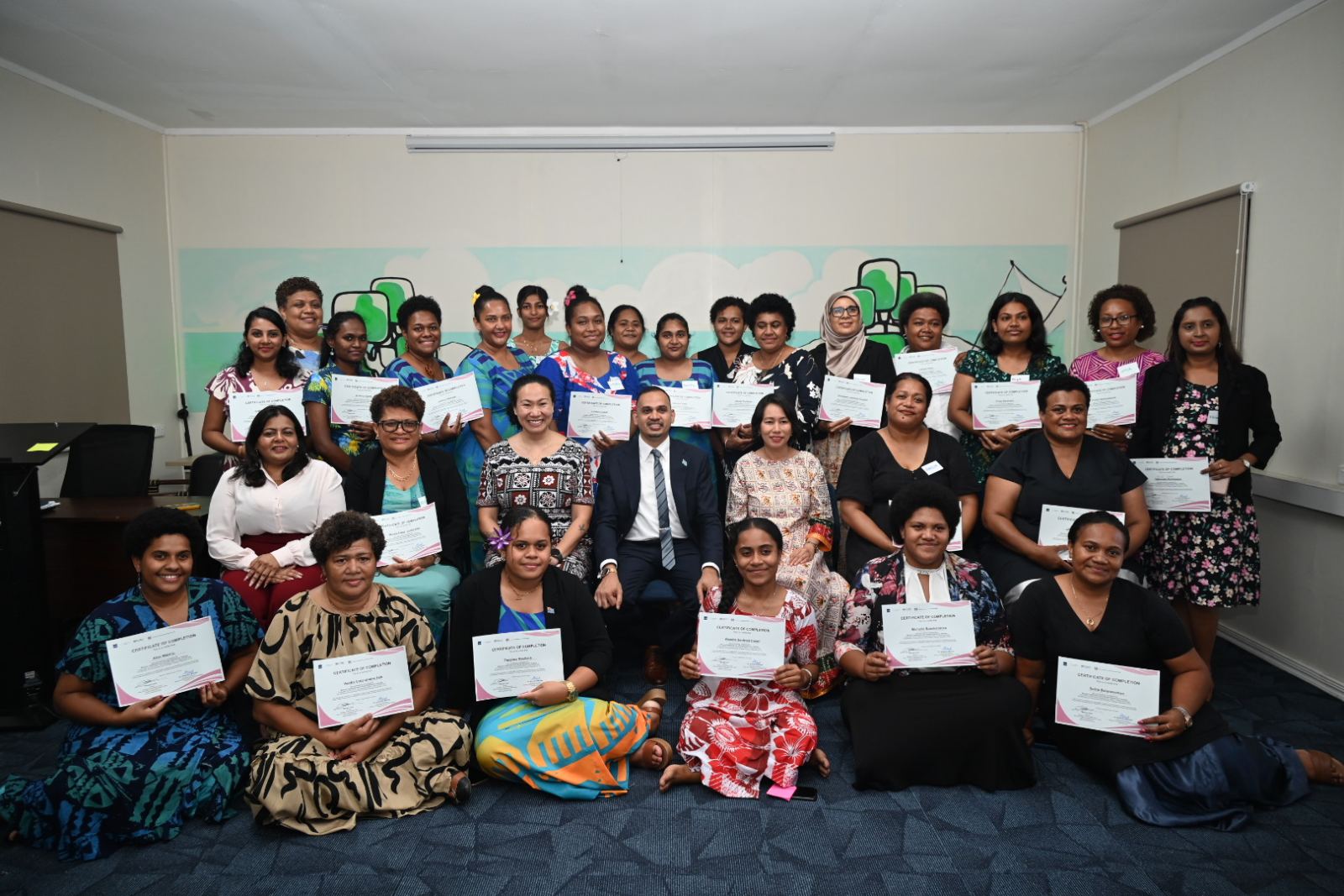
Fiji’s first cohort of the Women’s Leadership and Climate Resilience Training
Fiji’s first cohort of the Women’s Leadership and Climate Resilience Training has successfully completed a week-long programme, with five representatives from Fiji National University (FNU) among the participants.
The training, held at the Fiji Learning Institute for Public Service (FLIPS) in Nasese, Suva, was delivered by the Asian Development Bank in partnership with the Ministry of Environment and Climate Change. It brought together women from a range of organisations, creating a diverse and supportive learning environment.
Representing FNU were Acting Dean of the College of Medicine, Nursing and Health Sciences (CMNHS), Dr Amelia Turagabeci, Associate Dean Research at the College of Agriculture, Fisheries and Forestry (CAFF), Dr Mereia Fong, Head of Department for Surgery, Anaesthesia and Women’s Health, Dr Litia Narube, Head of Department Social Science, Dr Jasmine Hussain, and Public Relations and Communications Specialist Selita Bolanavanua.
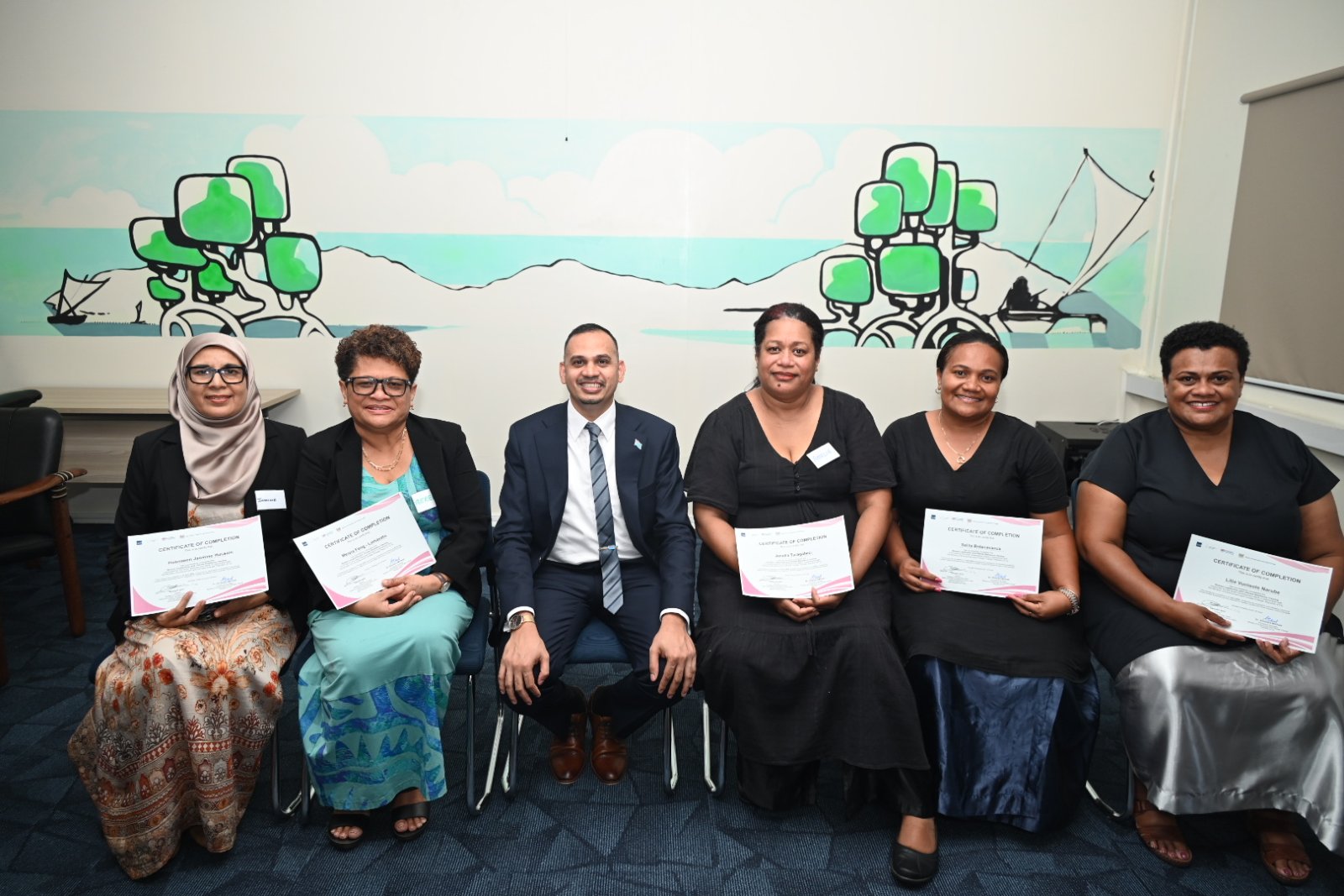
Head of Department Social Science, Dr Jasmine Hussain, Associate Dean Research at the College of Agriculture, Fisheries and Forestry (CAFF), Dr Mereia Fong, Permanent Secretary for Environment and Climate Change, Dr Sivendra Michael, Acting Dean of the College of Medicine, Nursing and Health Sciences (CMNHS), Dr Amelia Turagabeci, Public Relations and Communications Specialist, Selita Bolanavanua, and Head of Department for Surgery, Anaesthesia and Women’s Health, Dr Litia Narube.
As the first programme of its kind in Fiji, the initiative is designed to strengthen leadership capacity and promote inclusive approaches to climate resilience, with participants now part of a growing network of women driving change in this space.
Permanent Secretary for Environment and Climate Change, Sivendra Michael, encouraged participants to apply their learning and challenge existing systems.
“The world does not need you to simply participate in existing systems—it needs you to reshape them. Your leadership must reflect real experiences and ensure climate action works for everyone, not just a few. You will face challenges, but you must continue to make space for others, lift other women as you rise, and ensure your voices are heard where it matters most,” he said.
Reflecting on the experience, Dr Amelia Turagabeci described the training as both empowering and transformative.
“This training has reignited confidence in our abilities and reinforced the importance of supporting one another as women. It was also a wake-up call on the importance of self-care — because to lead effectively, we must first take care of ourselves,” she said.
She added that the programme highlighted the value of unity, wellbeing, and recognising leadership potential across all sectors.
Facilitator Arriane Olegario also acknowledged the Ministry for enabling the programme through the support of its Permanent Secretary.
As members of Fiji’s first cohort, the participants are not only graduates of the programme but are also contributing to a growing movement towards more inclusive and resilient climate leadership.