
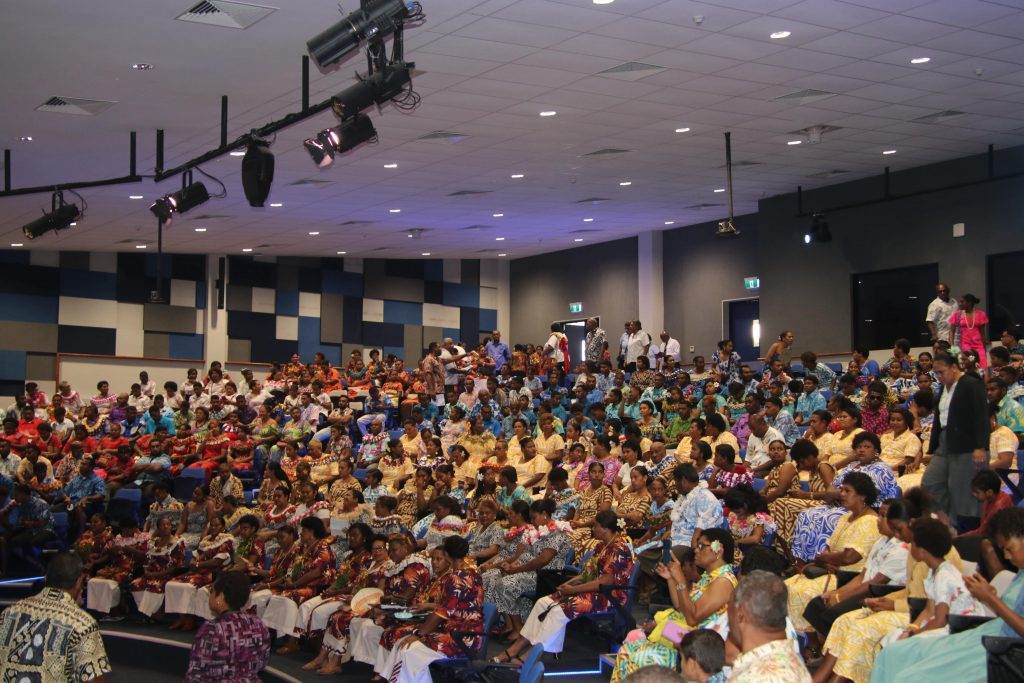
384 students graduated from the short courses offered by FNU at Basden College and Wailoku
The Fiji National University (FNU), through its National Training and Productivity Centre (NTPC), celebrated the graduation of 384 participants from the Rural, Remote and Maritime Technical and Vocational Education and Training (RRMTVET) Programme at a ceremony held at the FNU Valelevu Campus.
The graduation marked the successful completion of community-based, non-formal training programmes delivered in Wailoku and Newtown, designed to equip participants with practical, industry-relevant skills that promote self-reliance, employment and entrepreneurship.
Director Productivity and Innovation, Bob Mitchell
Delivering the welcome address, Director of Productivity and Innovation Bob Mitchell said the ceremony symbolised more than the completion of training, but the empowerment of individuals and communities through skills-based education.
“At FNU, we believe education must reach every community, regardless of location. Through programmes such as RRMTVET, we are crafting futures together by ensuring skills become stepping stones to financial independence and prosperity,” Mitchell said.
He highlighted that the programme reflects FNU’s commitment to inclusive education, aligned with its Strategic Plan to expand access to training beyond traditional campuses and into communities where skills are most needed.
Chief Guest, Solicitor-General, Ropate Green Lomavatu, commended FNU and NTPC for their leadership in developing Fiji’s skilled workforce, describing TVET as a national priority essential to economic resilience and sustainable development.
“A skilled labour force is the backbone of a resilient economy. Skilled workers build our infrastructure, support key industries and strengthen communities. Programmes such as this ensure that Fiji’s workforce is capable, adaptable and future-ready,” Mr Lomavatu said.
Solicitor General, Ropate Green Lomavatu
Mr Lomavatu noted that in 2025 alone, six RRMTVET programmes were conducted nationwide, reaching 1,749 participants across Nasautoka (Wainibuka), Drekeniwai (Cakaudrove), Wainimakutu (Namosi), Vunitogoloa (Rakiraki), Narewa–Nakavu–Navoci–Nadi, and Wailoku–Newtown.
The Solicitor-General encouraged graduates to apply their skills within their communities and contribute to national development before seeking opportunities abroad, describing them as vital partners in nation-building.
The graduates completed training in a wide range of vocational areas, including cookery, baking and pastry, electrical installation, plumbing, construction, garment construction, cabinet and joinery, floriculture, fibreglass repair, small engine repair, screen printing, and land management.
Seventy-three-year-old Voviliu Salababa was the oldest graduate and achieved his lifelong dream of attaining a formal education.
“I could not go to school when I was young because my parents could not afford my school fees,” revealed an emotional Salababa. “I love to cook, and so I decided to enrol in the Certificate in Cookery programme, and today I graduate with a certificate, and I can proudly say that I am no longer uneducated thanks to FNU!”
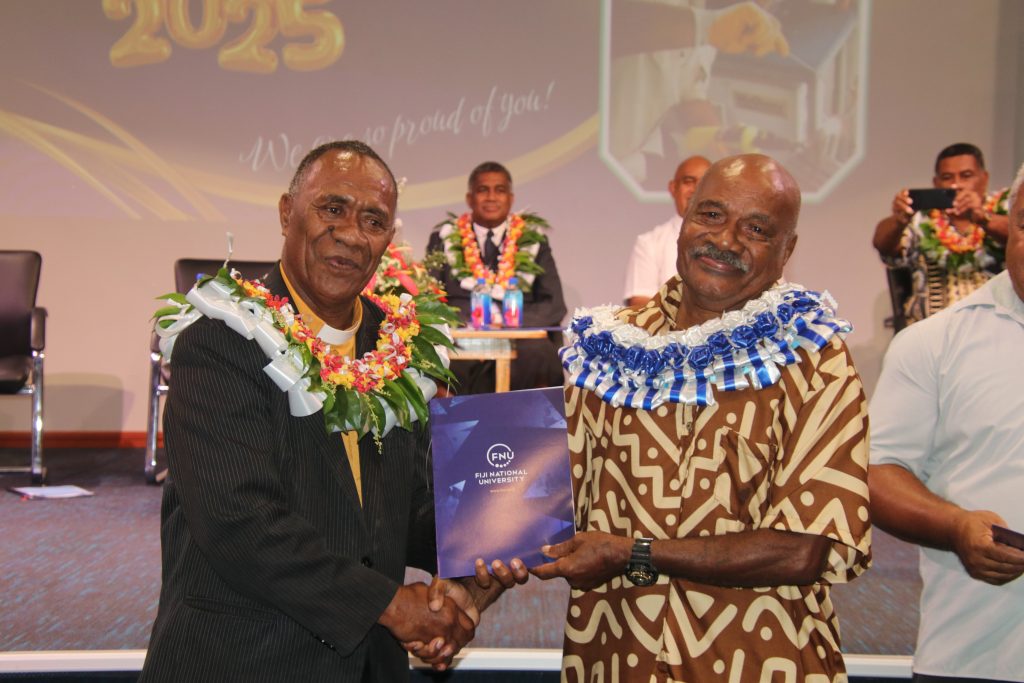
Voviliu Salababa
FNU reaffirmed its commitment to supporting graduates who wish to further their studies, noting that pathways remain open for continued learning and skills development within the University.