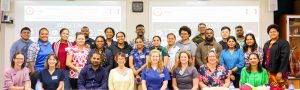
Earlier detection of pregnancy complications, could mean better outcomes for mothers and babies, as 21 healthcare professionals from Fiji and across the Pacific strengthen their ultrasound skills, through a specialised training course at the Fiji National University (FNU).
The International Society of Ultrasound in Obstetrics and Gynaecology (ISUOG) Basic Obstetrics and Gynaecology Ultrasound Training Course brought together Medical Imaging Technologists, Obstetrics and Gynaecology Registrars, and Consultants from Fiji and other Pacific Island countries. The four-day training was held from Wednesday, 23 September to Saturday, 26 September 2026 at the Anatomy Lab, Department of Medical Imaging & Anatomy.
Now in its third year, the course is delivered through a collaboration between the ISUOG, the World Federation for Ultrasound in Medicine and Biology (WFUMB), and FNU.
FNU Medical Imaging Department Adjunct Professor Dr Sue Campbell-Westaway said the programme was designed to strengthen everyday clinical ultrasound skills.
“The aim of the course, which we have now been running for the past three years, is to introduce our practitioners to everyday scanning in maternal-fetal medicine.”.
“We are very fortunate to have an international faculty coming over each year to take our students through what it is like to scan during the first, second and third trimesters of pregnancy, as well as in gynaecology,” Dr Sue Campbell-Westaway said.
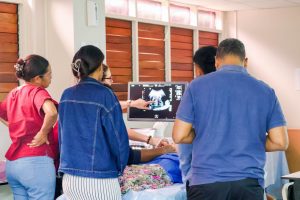
A key feature of the training is its practical focus, with participants working with patients from CWM Hospital and the Maternal-Fetal Medicine Unit.
“What our participants are scanning are real-life clinical situations. International Maternal-Fetal Medicine specialists from Australia also support participants at each workstation. They are assisting them at each workstation and guiding them in assessing whether a patient’s baby may need additional care,” she added.
Dr Campbell-Westaway also stated that the programme had attracted a broad range of healthcare professionals.
“The participants attending the course have included qualified O&G specialists, students undertaking the Master’s in O&G programme from around the Pacific, as well as radiographers, sonographers and nurses from across the region. Until now, there has been no formal ultrasound training programme in the Pacific, so we have been very fortunate to be able to provide this training,” Dr Campbell-Westaway explained.
The impact of the training is also being reflected in clinical outcomes.
Dr Campbell-Westaway said data presented during the course showed that maternal and neonatal mortality rates at CWM Hospital have declined, while the detection of abnormalities before birth has increased significantly.
“This means healthcare professionals are able to make decisions that help both the mother and baby have a much better outcome,” she said.
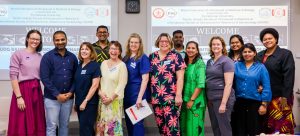
FNU Head of the School of Health Sciences Asst Prof. Raymond Keshwan said the initiative was changing how ultrasound was being used within healthcare.
“We have moved away from treating ultrasound as a very protected profession. We are training different categories of healthcare professionals to improve patient outcomes in Fiji,” Asst. Prof. Keshwan said.
He said ultrasound was increasingly being used as a multidisciplinary tool.
Asst. Prof. Keshwan said FNU was also working towards establishing a specialised postgraduate ultrasound programme.
“In the meantime, what we are doing is upskilling healthcare professionals to that level because ultrasound is already widely used in Fiji and throughout the wider Pacific,” he added.
FNU currently conducts around two to three ultrasound workshops each year, covering areas including obstetrics and gynaecology, emergency medicine and point-of-care ultrasound.
“There are better days ahead for ultrasound in Fiji and the region,” Asst. Prof. Keshwan further stated.
As the demand for skilled healthcare professionals continues to grow, the training provides an important platform for strengthening clinical capability and expanding access to specialised knowledge across the Pacific.
Through collaboration, practical learning and regional capacity building, FNU and its partners are helping ensure that healthcare professionals have the skills to diagnose earlier, respond sooner and support better outcomes for mothers and babies.