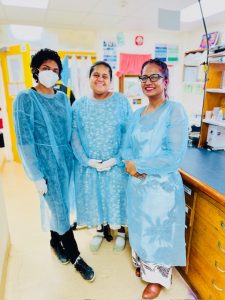
The Fiji National University (FNU), through its Department of Pathology and Medical Laboratory Science within the College of Medicine, Nursing and Health Sciences (CMNHS), has strengthened its commitment to healthcare quality and safety.
This was by delivering an Infection Prevention and Control (IPC) training workshop at Labasa Divisional Hospital last week.
Facilitated by Dr Aruna Devi, the workshop brought together 31 participants from laboratory services, clinical governance, and support staff, reflecting a multidisciplinary approach to improving infection control practices in healthcare settings.

Dr Aruna Devi
The training focused on strengthening infection prevention practices, enhancing laboratory safety, and supporting quality improvement initiatives aligned with SLIPTA standards.
A key finding from the workshop revealed that more than 70 per cent of participants had not previously received formal IPC training, underscoring the critical need for ongoing capacity-building initiatives.
Participants demonstrated strong foundational knowledge in essential practices such as hand hygiene and the correct use of personal protective equipment (PPE). However, there was clear interest in expanding their expertise into more advanced areas, including outbreak preparedness, antimicrobial resistance, and prevention of needle-stick injuries.
Speaking on the importance of the training, Dr Devi highlighted the growing complexity of infection control challenges in modern healthcare systems.
“Infection prevention and control is not a one-time intervention but a continuous process that requires collaboration, vigilance, and ongoing education,” she said.
“With emerging health threats such as HIV and co-infections, it is essential that healthcare workers remain well-equipped with the latest knowledge and best practices.”
Key discussions during the workshop addressed improving the use of disinfectants, strengthening biosafety measures in specimen handling, and ensuring that IPC training is inclusive of all staff, particularly cleaning personnel who play a vital role in infection control.
Concerns were also raised regarding blood donor safety, with participants recommending the strengthening of donor screening processes prior to donation to minimise potential risks.
Dr Devi further emphasised the importance of teamwork in addressing these challenges.
“Effective infection control depends on a coordinated effort across all levels of the healthcare system. By working together, we can build safer environments for both patients and healthcare workers,” she added.
The workshop marks the beginning of an ongoing collaboration between FNU’s CMNHS and Labasa Hospital, with plans to expand training programmes and support continuous professional development for healthcare workers, despite existing resource constraints.
This initiative was supported by Aspire Grants Fiji, reinforcing the importance of partnerships in advancing healthcare standards across the country.
As FNU continues to play a leading role in health workforce development, such initiatives highlight the university’s commitment to strengthening national capacity in infection prevention and control, ultimately contributing to safer and more resilient healthcare systems in Fiji.