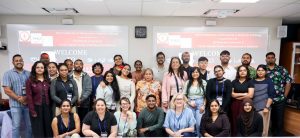
A specialised vascular ultrasound workshop hosted by the Fiji National University has brought together clinicians from Fiji, Vanuatu and Kiribati to strengthen regional capability in the assessment of carotid disease and deep vein thrombosis.
The Vascular Ultrasound Course, held from 1–2 July 2026, was delivered through the College of Medicine, Nursing and Health Sciences, the School of Health Sciences and the WFUMB Fiji Centre of Education, in collaboration with the Pacific Islands Society for Ultrasound in Medicine and Biology.
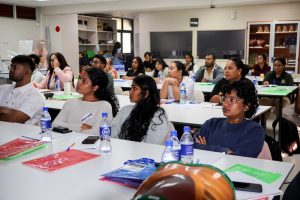
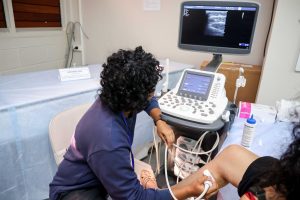
The workshop had 24 participants, including participants from Fiji, Vanuatu and Kiribati. Over two days, the programme covered ultrasound physics, DVT lectures and demonstrations, carotid ultrasound teaching, supervised scan stations, recap sessions, question-and-answer discussions and participant feedback.
The course was facilitated by Susan Campbell Westerway, Carolynne Cormack, Lynne Johnson and Claire O’Reilly, who provided structured teaching and practical support across the workshop.
Unlike general ultrasound awareness training, the vascular course focused on conditions where delay or missed diagnosis can have serious consequences. Deep vein thrombosis may lead to pulmonary embolism if not identified and managed early, while carotid disease is clinically important because of its association with stroke risk.
For Pacific health systems, where referral pathways, travel distance, equipment access and workforce shortages can all affect timely diagnosis, strengthening vascular ultrasound capability is a patient safety issue.
Assistant Professor Raymond R. Keshwan, Head of the School of Health Sciences, Co-Director of the WFUMB Fiji Centre of Education and current President of the Pacific Islands Society for Ultrasound in Medicine and Biology, said the workshop was an important regional investment.
“This workshop matters because vascular conditions do not wait for perfect systems. A patient with suspected DVT or significant carotid disease needs timely assessment, appropriate referral and a clear management pathway,” Assistant Professor Keshwan said.
“In the Pacific, we cannot build diagnostic services by relying only on equipment donations or overseas referral pathways. Equipment without trained people does not improve access. We need local and regional capability, and that requires structured training, standards and ongoing professional support.”
Assistant Professor Keshwan said Fiji’s role as a training hub was becoming increasingly important.
“Fiji has a responsibility and an opportunity to support regional health workforce development. When participants from Vanuatu and Kiribati train alongside Fijian clinicians, we are not just running a workshop. We are building a regional network of practice.”
He said the broader issue for Pacific Island countries is that imaging services are often concentrated in major centres, while patients are spread across islands and remote communities.
“The geography of the Pacific makes diagnostic access difficult. A patient’s outcome can be affected by where they live, how quickly they can be referred, and whether the right skills are available at the first point of care. Training in vascular ultrasound helps reduce that gap by improving local recognition, local confidence and local decision-making.”
Assistant Professor Keshwan said the long-term goal was to develop ultrasound capability that is clinically useful, professionally responsible and regionally sustainable.
“We must be honest about the Pacific context. We need strong imaging professionals, but we also need a wider clinical workforce that understands how ultrasound can support patient care. The future is not about keeping ultrasound locked away. It is about using it safely, appropriately and intelligently to improve outcomes.”
The Vascular Ultrasound Course is part of FNU’s ongoing contribution to strengthening diagnostic imaging education, regional professional development and patient-centred healthcare across Fiji and the Pacific.