
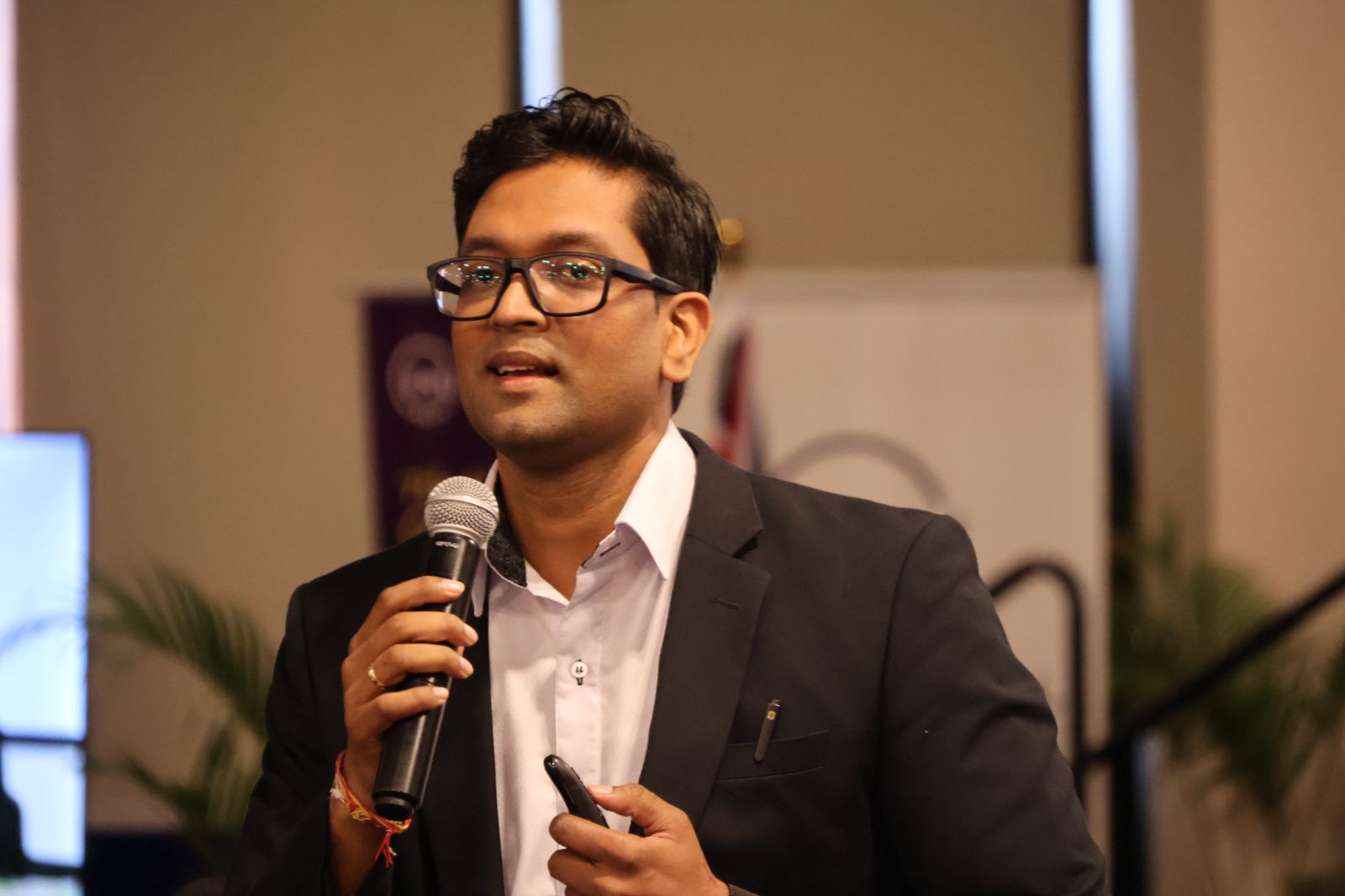
Prashil Kumar presenting on AI Enabled Cyber Threats at the NCIT
Artificial Intelligence (AI) is changing the way people live, work and learn. But as its use grows, so do the risks.
Without responsible use and stronger safeguards, AI can accelerate cyber threats and expose individuals and organisations to significant risks.
That was the key message on the second and final day of the 7th National Conference on Information Technology (NCIT) 2026, where delegates from government, industry, academia and the technology sector came together under the theme, “From Vanua to Virtual: People, Trust and Technology Driving a Secure, Trusted and Productive Digital Pacific.”
Among the keynote presenters was Cyber Acads Chief Executive Officer, Mr Prashil Kumar, who spoke about AI-enabled cyber threats and the challenges facing organisations across Fiji and the wider Pacific.
Mr Kumar said his presentation focused on how AI was accelerating cyber risks and what organisations could do to respond.
“AI is surrounded by a lot of excitement at the moment, but my focus is on how it has enabled and accelerated cyber threats and what that means for organisations here in Fiji. We are already dealing with skills shortages, limited cybersecurity budgets, particularly for small and medium-sized businesses, and increasing digital risks. The question is no longer whether AI presents risks, but how we navigate them responsibly,” Mr Kumar stated.
He warned that organisations could not afford to ignore these risks.
“As IT professionals and business leaders, we cannot simply accept the risks and hope for the best. It is our responsibility to take action and protect our organisations,” he added.

Cyber Acads Chief Executive Officer, Prashil Kumar
Mr Kumar also raised concerns about the growing use of AI tools among students and professionals, saying many users may unknowingly share sensitive information with publicly available AI platforms.
“People are increasingly relying on AI because it is efficient. It helps write documents, generate ideas, and consolidate information quickly. But many students and businesses don’t realise just how much personal and organisational information they are feeding into these platforms. They are not being careless or malicious; they simply don’t understand the risks,” he reiterated.
Mr Kumar compared the current state of AI governance to the early days of motor vehicles.
“Artificial Intelligence is where cars once were before seatbelts and speed limits existed. The technology has arrived, but the safeguards are still catching up,” he said.
While governments continue to develop AI legislation and regulations, Mr Kumar encouraged organisations to act now.
“If you know there is a risk, you don’t need to wait for legislation. Every organisation can introduce responsible AI policies, educate staff, establish guardrails, and define what AI should and should not be used for,” Mr Kumar highlighted.
He also stressed that Fiji’s approach should reflect its own cultural, social, and business environment.
“There is never a one-size-fits-all solution. We learn from international best practice, but policies must be tailored to Fiji’s context through consultation and collaboration,” said Mr Kumar.
The discussion also touched on AI’s impact on the creative industries, including concerns about protecting local artists whose work is increasingly being replicated through AI-generated music and artwork.
Mr Kumar expressed support for efforts to protect local musicians and other creators, following concerns raised by the Fiji Performing Rights Association (FIPRA) over AI-generated remakes of Fijian songs.
“Our local artists spend years developing their craft. Their music, artwork and culture represent countless hours of dedication. When someone simply uses AI to recreate that work, we must ask, whether that is fair to the original creator. Protecting local talent is important,” Mr Kumar elaborated.
He acknowledged that enforcing AI-related copyright protections would bring new challenges, including identifying AI-generated content.
Reflecting on NCIT 2026, Mr Kumar said the conference provided an important opportunity for industry, government, and academia to work together.
“These discussions demonstrate the value of bringing industry, government, and academia together. This conference is helping organisations move beyond awareness and towards action,” he said.
Over two days, NCIT 2026 featured presentations, panel discussions and industry showcases covering emerging technologies, cybersecurity, digital inclusion, artificial intelligence and digital trust.
The conference reinforced the importance of collaboration and practical action in building a secure, resilient, and productive Digital Pacific.